

“Discourage litigation. Persuade your neighbors to compromise whenever you can."
– Abraham Lincoln
MEDIATION
-
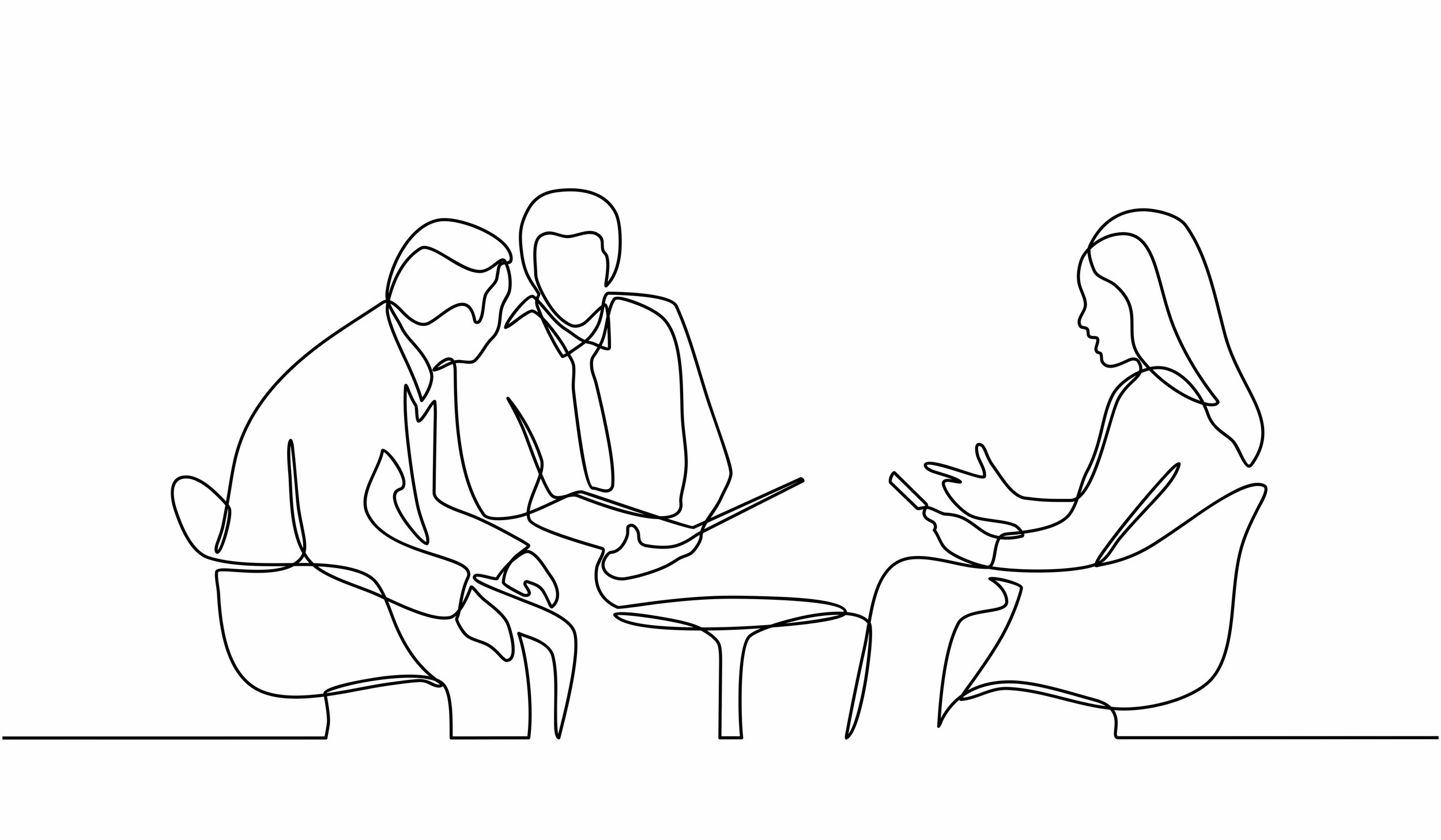
Mediation is a confidential process that allows both parties to speak to one another, to be accountable, and to acknowledge mistakes in addition to reaching a monetary settlement. Most legal disputes can be resolved through a non-adversarial process known as mediation--even when emotions are high and agreement seems impossible. Mediation is confidential and usually costs a fraction of full-blown litigation.
Conflict takes place in an environment of mistrust. Compassion helps to restore some measure of basic trust so that some form of functional communication can take place.
When that communication occurs, we usually will learn something essential for the resolution of the matter. We already know what we think. Compassion allows us to understand what they think, and why.
-
The way in which compassion is most commonly and usefully expressed in the midst of conflict is through listening. Not just the kind of listening we do while we are waiting to speak, but real listening.
When our listening becomes as passionate as our speaking, we’re then able to invoke the transformative power of silence. It’s only in silence that real change takes place.
This approach depends more heavily on listening than talking. It allows both parties to feel heard and supported while providing guidance for negotiating the legal process.
-
Before a trial is scheduled, many courts require the parties to participate in what is called a “settlement conference.” This is usually an all-day affair in which the lawyers formulate their best guess as to how a judge or jury would decide the case, and then attempt to convince the parties to consent to that result.
There are many benefits to this approach, but it seldom addresses the real reasons the parties are entangled in conflict.
Mediation, at least as I practice it, is designed to get to the root of the conflict and help the parties resolve it on their own terms. The process is controlled by the parties, not the mediator or their representatives. In this way, the mediator serves as a guide and the lawyers serve as advisors who review and document any agreement their clients reach.
Typically lawyers are not present at the mediation sessions. This process takes place in a series of two hour mediation sessions that address each component of the dispute.
Given the strong emotions that can arise in conflict, this approach allows the parties to express themselves, to navigate their own feelings and to make good decisions that allow them to move ahead with their lives.
Areas of Practice
Divorce Mediation

The end of an intimate relationship can be disruptive, painful and confusing. When children are involved, the stakes get even higher and the emotions can become even more incendiary. Resolving issues of parenting and property division in public, in a courtroom, should be our last resort. Litigation, while sometimes necessary, can be expensive and invasive. There are better ways to untie the knot.
It is my belief that we should first look to the parties—not to the legal system—to determine what outcome is most equitable and best meets the needs of the children. In most cases, even when emotions burn hot, mediation can help guide the parties to a fair and responsible resolution. And at a fraction of the cost of litigation. The process of mediation provides the best opportunity to establish a post-divorce relationship that is respectful and even supportive.
Lawyers serve an essential role in the mediation process, helping their clients gather information, counseling them about their legal rights and preparing final documentation. But the clients remain at the center of the process. After all, they are the ones who will have to live with the new arrangement.
At the outset, most couples are extremely skeptical about the process and doubt that a non-adversarial resolution is possible. Nonetheless, they reach a complete settlement about 90% of the time. Consider whether it’s worth a try. You have nothing to lose.
Tort & Malpractice Mediation

At some point in our lives, most of us will have to rely on the services of a professional—a doctor, lawyer, engineer or other skilled provider. And sometimes, that professional makes a costly mistake.
Litigation over that mistake is expensive and can take years to resolve, requiring the services of experts, the exchange of mountains of documents and depositions of numerous witnesses. And nowhere do we have the opportunity to have a candid conversation with one another about what really happened and why.
Personal injury and malpractice cases typically are resolved through settlement conferences, but I believe that the particular style of mediation that I have practiced the past forty years is especially satisfying to parties on both sides of such cases.
Whether conducted in person or by remote means, the first stage of mediation provides a forum for attorneys for the plaintiff and the defendant to lay out their arguments, claims and defenses to one another. This is followed by a detailed description by the parties themselves of the incident or occurrence and how it affected them—allowing for emotional “venting,” if needed, and to provide an opportunity to be heard. Some clients call this “having your day in court,” which can be critical in opening up substantive settlement negotiations.
Especially in malpractice cases, having the opportunity to speak candidly to the other side can be critical not only for the plaintiff, but for the defendant as well. Doctors and lawyers, as well as other professionals, can be emotionally burdened by the consequences of their mistakes. Because it is confidential, mediation allows both sides to acknowledge the human side of the incident and achieve a feeling of closure. Malpractice mediation recognizes that reaching an agreement is about more than money.
Probate Mediation

One area of the law for which mediation is especially helpful is in the probate and administration of the last wishes of a family member. The death of a parent or close relative can open up old wounds and grievances that the formal legal system is unable to address or resolve. Probate litigation only exacerbates the conflict and deepens the wounds.
Probate mediation can provide a safe environment for addressing these concerns. With the legal process in the background, mediation can give heirs and interested parties a productive forum for working together rather than fighting with one another.
Family Mediation

Mediation can be helpful even when courts and lawyers aren’t involved. Mediation can be extremely useful for sorting out estate planning, dealing with issues of inheritance, transferring ownership of a family business or just having better communication about sensitive topics. Married couples can find that mediation allows them to achieve greater clarity about their expectations of one another or resolving old hurts. Mediation is not therapy, but it’s often therapeutic.
Ideas from Brian’s Blog:
HOW MEDIATION CAN WORK FOR YOU


TESTIMONIALS
-
![]()
--C.G., Physician
“Thank you for your skill, your sensitivity and your friendship.”
-
![]()
--R.J., Accountant
“You were great. I don’t think anyone else could have gotten us both to an agreement.”
-
![]()
--B.B., College Professor.
“Thank you for all your help during this difficult time. Things have been very complicated lately. Again, thanks for your caring concern. It has helped greatly and made a difficult time go more smoothly.”
-
![]()
--M.L., Business owner
“Brian: Thank you for the work you do—important work in mending broken relationships and helping people heal. You did an excellent job in my mediation with Bob…Thank you and stay inspired.”
-
![]()
--R.A., Minister
“I am so grateful for your work with this couple from my congregation. They came to me to sing your praises and express their relief that someone was able to see past their request for divorce mediation and glimpse the possibilities that were still there for them as a couple. Not a usual outcome for you, I expect, but a reminder of how many surprises life holds for us!”


Peace is not the absence of conflict, but the ability to cope with it.
~ Mahatma Gandhi